What Is Pelvic Floor Dysfunction? Signs, Symptoms & When to Get Help
Something Feels "Off"...But You're Not Sure Why
Maybe you leak a little when you sneeze. Maybe you constantly feel like you need to pee, even when you just went. Bowel movements require more effort than they should. Sex has become uncomfortable. Or maybe your pelvis simply feels heavy, tense, painful, or just...off.
These symptoms may seem completely unrelated. But for some people, they have something in common: the pelvic floor isn't functioning the way it should. This is often referred to as pelvic floor dysfunction.
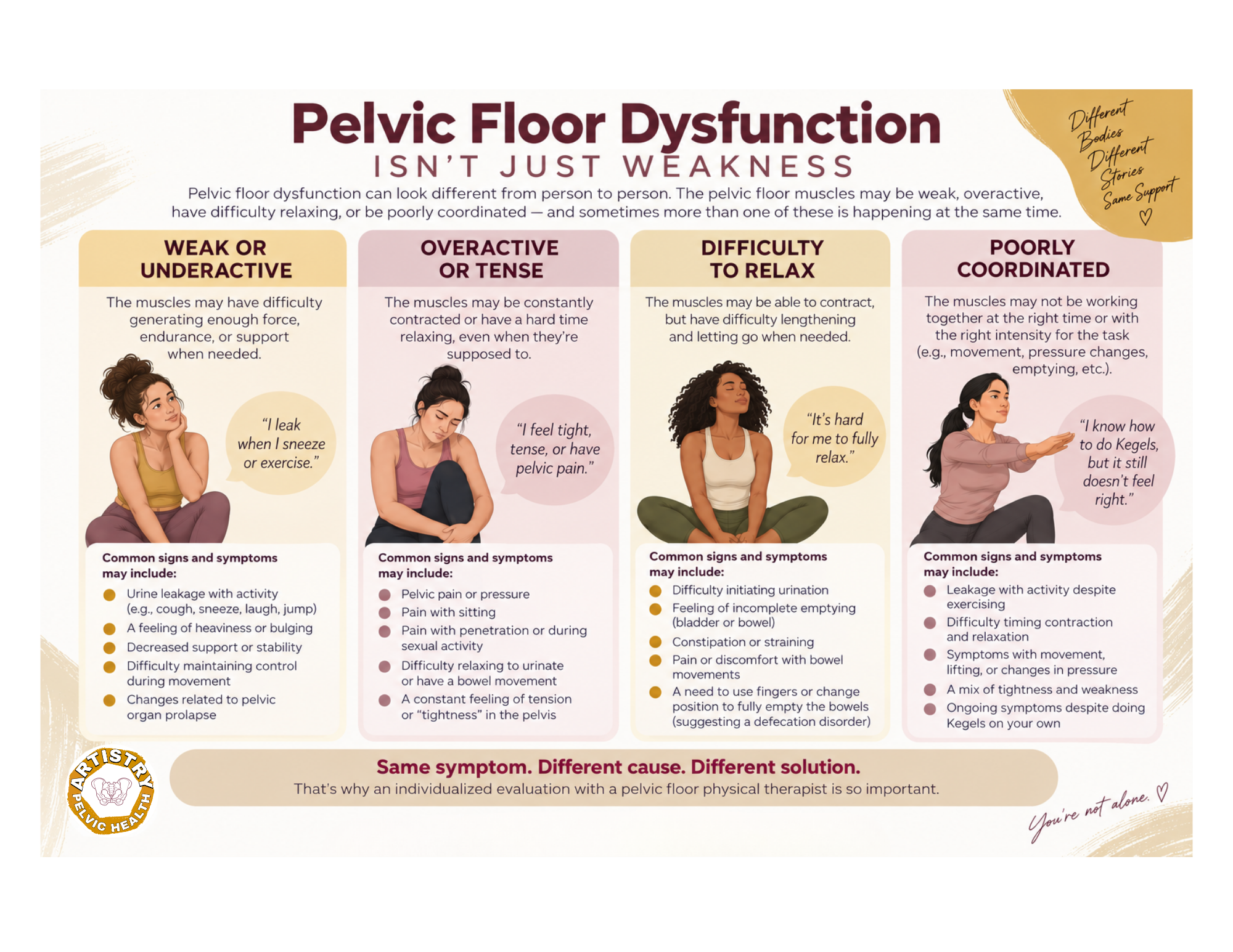
Pelvic floor dysfunction doesn't always mean your muscles are weak. Sometimes they're too tense. Sometimes they have difficulty relaxing. Sometimes the biggest problem is coordination.
What Is Pelvic Floor Dysfunction?
Your pelvic floor is a group of muscles and connective tissues at the bottom of your pelvis. These muscles contribute to bladder and bowel control, pelvic-organ support, sexual function, movement, and pressure management.
If you want a closer look at the anatomy, read: Meet Your Pelvic Floor: The Small Muscles That Do Big Jobs.
Pelvic floor dysfunction is a broad term used to describe problems involving how the pelvic floor and related systems function. Symptoms can involve bladder or bowel control and emptying, pelvic-organ support, sexual function, and pelvic pain. And pelvic floor dysfunction can look very different from one person to another.
Pelvic floor dysfunction isn't just weakness. Your pelvic floor may be weak or underactive, overactive or tense, difficult to relax, poorly coordinated, or experiencing a combination of these problems.
What Are the Signs of Pelvic Floor Dysfunction?
One reason pelvic floor dysfunction can be confusing is that the symptoms don't always seem connected. Someone may first notice a bladder problem. Someone else may experience constipation. Another person may have pelvic pain, discomfort during intimacy, or a feeling of pressure or heaviness.
Here are some of the more common ways pelvic floor dysfunction can show up.
Bladder Symptoms
Urine leakage with coughing, sneezing, laughing, running, or jumping
A sudden or difficult-to-control urge to urinate
Frequent urination
Difficulty starting urination or relaxing while urinating
Feeling like your bladder hasn't completely emptied
Your pelvic floor has to do two seemingly opposite jobs: help maintain continence when you need to hold urine and relax appropriately when it's time to go. That's one reason bladder problems aren't always as simple as having “weak muscles.”
Bowel Symptoms
Constipation or frequent straining
Difficulty relaxing to have a bowel movement
Feeling like you haven't completely emptied
Stool leakage or fecal smearing
Difficulty controlling gas
Rectal or anal pain
Having a bowel movement requires coordination between your abdomen, rectum, anal sphincters, and pelvic floor. Sometimes the problem isn't a lack of strength. It's difficulty letting go.
Pelvic Pain Symptoms
Pelvic, perineal, vaginal, vulvar, penile, testicular, rectal, or tailbone pain
Lower-abdominal, groin, hip, or associated low-back symptoms
Pain with sitting
Pain is complex and doesn't always come from one muscle or structure. Pelvic symptoms deserve an individualized assessment rather than assuming the pelvic floor is always the only cause.
Sexual Symptoms
Pain with penetration
Pain during or after sexual activity
Difficulty relaxing the pelvic floor
Pelvic discomfort with arousal or orgasm
Changes in orgasm
Some erectile or ejaculatory concerns
Sexual symptoms can have many possible causes, so a thorough evaluation is important rather than assuming the pelvic floor is always responsible.
Pelvic Pressure, Heaviness, or Bulging
Pelvic heaviness or pressure
Vaginal bulging
A feeling that something is “falling” or “dropping”
These can be symptoms of pelvic organ prolapse, which occurs when one or more pelvic organs descend toward or into the vaginal canal. Pelvic floor muscles are only one part of the pelvic-organ support system.
Pregnancy & Postpartum Symptoms
Urinary or bowel leakage
Pelvic pressure or heaviness
Pelvic or pelvic-girdle pain
Pain with sexual activity
Difficulty returning comfortably to exercise
Changes in pelvic-floor strength, relaxation, or coordination
Some changes are expected as the body recovers from pregnancy and birth. But symptoms that persist, worsen, or interfere with daily life are worth discussing with a healthcare professional.
Common doesn't mean you simply have to live with it.
Could Your Pelvic Floor Be Involved?
Pelvic floor dysfunction can show up in many different ways. Some symptoms are obvious, like urine leakage. Others, such as constipation, pelvic pain, pressure, discomfort with intimacy, or changes after surgery, may not seem connected at first.
Use this quick self-check to notice patterns in what you're experiencing.
Symptom Self-Check
Use this quick self-check to notice patterns in what you're experiencing. It's educational, not diagnostic — it doesn't produce a score or a diagnosis. Bring what you check to a pelvic health evaluation.
Bladder
Bowel
Pain & pressure
Sexual health
Pregnancy & postpartum
After surgery
This self-check is educational, not diagnostic — it doesn't score or diagnose anything. Bring what you check to a pelvic health evaluation and we'll take it from there.
Book my FREE discovery callWhat Do Your Answers Mean?
If you checked one or more symptoms, it doesn't automatically mean you have pelvic floor dysfunction. Many pelvic, bladder, bowel, sexual, and pain symptoms can have more than one cause.
But your answers may be a sign that a closer evaluation could be worthwhile—especially if your symptoms are persistent, recurring, worsening, or affecting your quality of life.
A pelvic floor physical therapist can help determine whether your pelvic floor, surrounding muscles, movement patterns, nervous system, or another factor may be contributing.
Want to keep this list? Get the printable Pelvic Floor Symptoms Checklist plus helpful pelvic-health resources delivered to your inbox.”
What Causes Pelvic Floor Dysfunction?
There isn't one universal cause. Pelvic floor symptoms can develop through a combination of muscular, connective-tissue, neurologic, medical, behavioral, and lifestyle factors.
Factors that may contribute include:
Pregnancy and childbirth
Pelvic or abdominal surgery
Prostate surgery
Aging and hormonal changes
Chronic constipation and repeated straining
Persistent coughing
Injury or trauma
Persistent pelvic or musculoskeletal pain
Certain neurologic or medical conditions
Repetitive demands placed on the pelvic floor
Sometimes there isn't one obvious event you can point to. Your symptoms are still worth evaluating even when you can't identify exactly when or why they started.
A Weak Pelvic Floor Isn't Always the Problem
Pelvic floor dysfunction does not automatically mean you need more Kegels.
Imagine two people who both leak urine when they sneeze. One person's pelvic floor may need improved strength and endurance. The other person's muscles may be overactive, have difficulty relaxing, or struggle to coordinate effectively with a sudden increase in pressure.
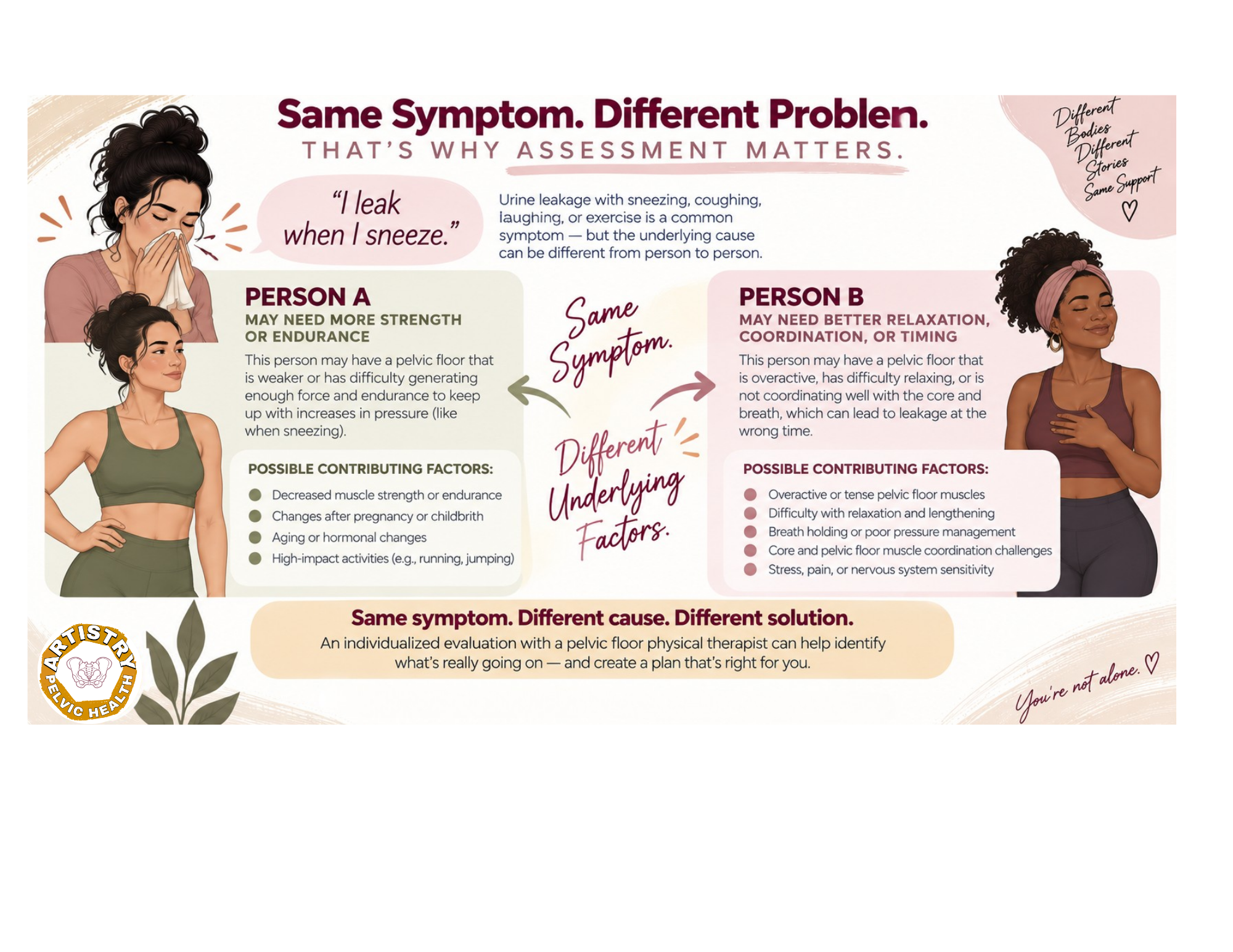
The same is true with bowel symptoms. Someone who strains during bowel movements may not need stronger pelvic-floor muscles at all. They may need to improve their ability to relax and coordinate the muscles during emptying.
That's why pelvic floor muscle training can involve improving strength, endurance, power, relaxation—or a combination of these—depending on the person's needs.
How Does a Pelvic Floor Physical Therapist Figure Out What's Wrong?
A pelvic floor physical therapist doesn't just ask, “Are your pelvic floor muscles weak?” A comprehensive evaluation may consider your:
Symptoms and health history
Bladder and bowel habits
Breathing
Posture and movement
Abdominal and core function
Hip and lower-extremity mobility and strength
Pelvic floor strength and endurance, when appropriate
Ability to relax and coordinate the pelvic floor
Areas of tension or tenderness
Previous surgeries, injuries, pregnancy, or birth history
Daily activities and exercise
With your consent, an evaluation may also include an external and/or internal pelvic-floor examination. An internal examination can provide useful information, but it is not automatically required for pelvic floor physical therapy.
The goal isn't simply to find a “weak muscle.” It's to understand why you're experiencing your symptoms.
How Is Pelvic Floor Dysfunction Treated?
Treatment should depend on what the evaluation finds. It may include:
Education about your symptoms
Pelvic floor strengthening when appropriate
Pelvic floor relaxation or down-training when appropriate
Breathing and pressure-management strategies
Bladder or bowel retraining
Mobility and flexibility work
Core, hip, or whole-body strengthening
Movement retraining
Manual therapy when appropriate
Strategies for daily activities
An individualized home program
Pelvic floor rehabilitation is not one-size-fits-all.
Want to know more about what treatment actually looks like? Read: What Is Pelvic Floor Physical Therapy? A Beginner's Guide.
When Should You Get Help?
You don't need to wait until your symptoms become severe. Consider talking with a healthcare professional or pelvic floor physical therapist when symptoms are:
Persistent or recurring
Getting worse
Causing pain
Affecting bladder or bowel function
Interfering with exercise, work, sleep, travel, or daily activities
Making intimacy uncomfortable or difficult
Causing you to change your life to avoid symptoms
Some pelvic symptoms deserve prompt medical evaluation rather than simply starting pelvic floor exercises, including sudden severe pelvic or abdominal pain, inability to urinate, new unexplained bleeding, fever or signs of acute illness, or new significant neurologic symptoms.
When you're unsure, it's appropriate to start by talking with a qualified healthcare professional.
Your Symptoms Are Information
Leakage. Constipation. Pain. Pressure. Urgency. Discomfort with intimacy.
These symptoms may be common, but that doesn't mean they should automatically be dismissed. Pelvic floor dysfunction can look different from person to person, which is exactly why individualized evaluation matters.
The goal isn't simply to make your pelvic floor stronger. It's to understand what your pelvic floor is doing, what it may be having difficulty doing, and how the rest of your body is contributing.
Key takeaway
Same symptom. Different cause. Different solution. An individualized evaluation is what tells you which one you're dealing with.
-
1. National Institute for Health and Care Excellence (NICE). Pelvic floor dysfunction: prevention and non-surgical management. NICE Guideline NG210. Published December 9, 2021.
2. American Physical Therapy Association Academy of Pelvic Health. What to Expect During Pelvic Health Physical Therapy. Published August 27, 2025.
3. Bø K, Frawley HC, Haylen BT, et al. An International Urogynecological Association/International Continence Society joint report on the terminology for the conservative and nonpharmacological management of female pelvic floor dysfunction. Neurourology and Urodynamics. 2017;36(2):221–244.
4. Bø K, Berghmans B, Mørkved S, Van Kampen M. Evidence-Based Physical Therapy for the Pelvic Floor. Elsevier.
Developer/source links: NICE NG210
-
Image 1:
Pelvic floor dysfunction not just weaknessProvided by Artistry Pelvic Health / created for this blog workflow.
Image 2:
Could your pelvic floor be involved
Provided by Artistry Pelvic Health / created for this blog workflow.
Image 3:
Same symptom different problem
Provided by Artistry Pelvic Health / created for this blog workflow.
Wondering whether pelvic floor PT is right for you?
Book a free discovery call with Dr. Ciara - no pressure, no commitment, just answers.